Today is my friend Jerry’s birthday. He’s an architect, and my mentor in all things building-related (1). In some ways, our jobs are similar: he went out today to measure a dentist’s office to remodel it; I went out measure some mud huts to put concrete floors in. But in other ways, we deal with very different architecture. To celebrate Jerry’s birthday, I am going to share some of those differences.
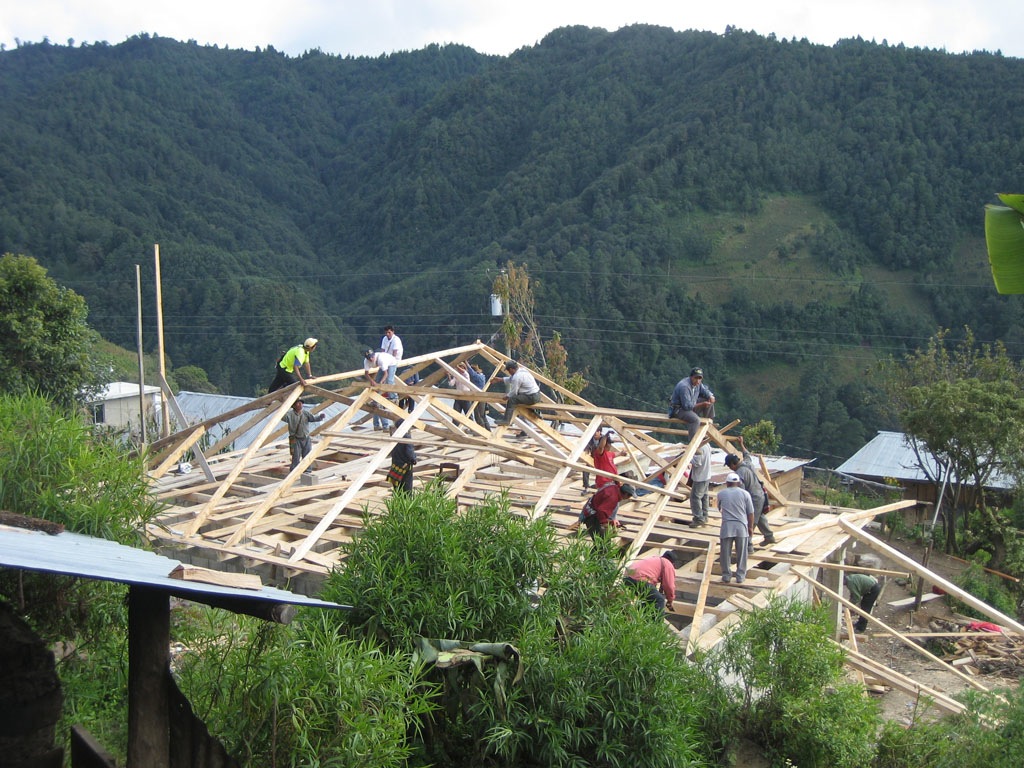
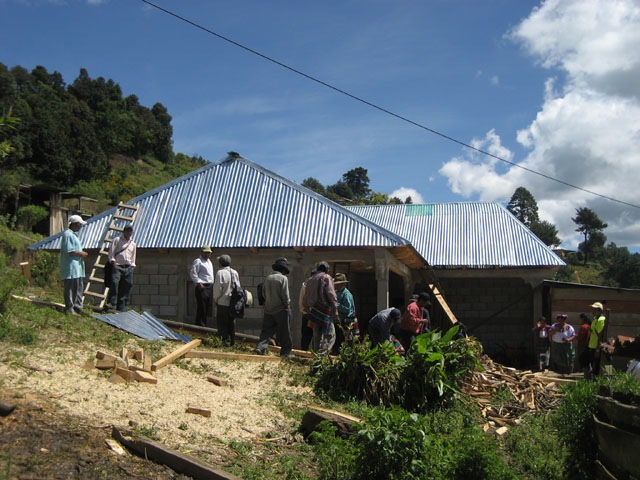
Things are always on the move here, despite the recession in the US and its catastrophic effects on the immigrant workers. A few still can save enough money to send back to build houses. Here we see the village men putting a roof on our neighbor Petronela’s house. She has been living for about half a year with half a dozen kids in a wooden box she built herself in the front yard, so she’s probably excited to have a new house.
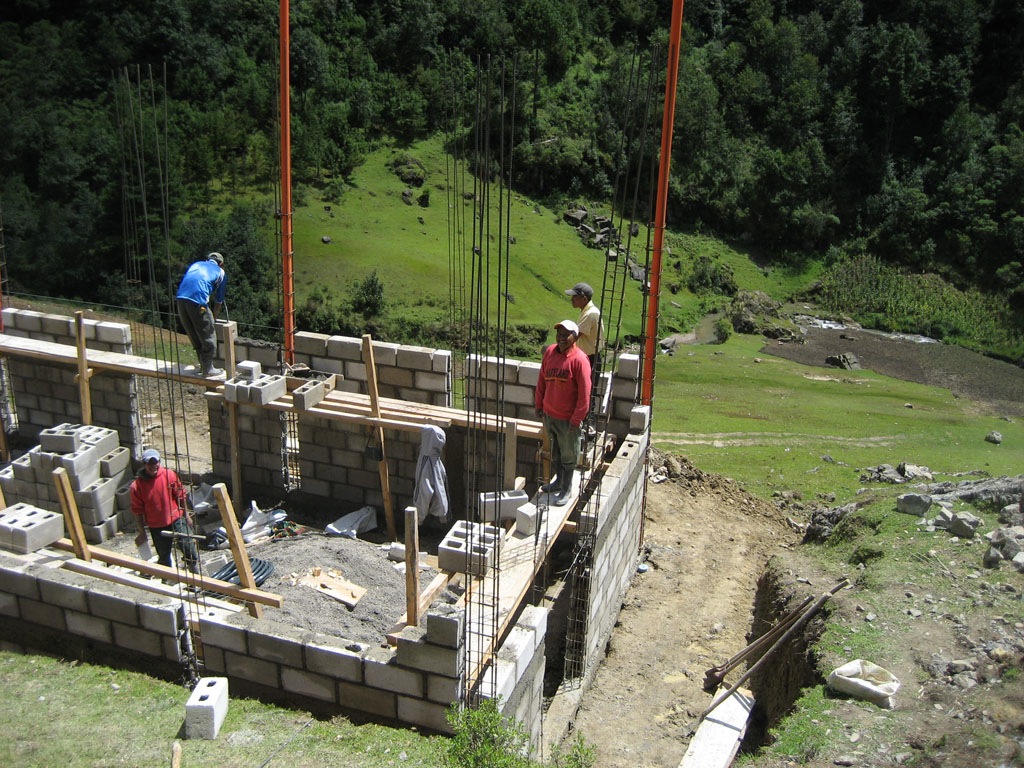 One of our favorite countryside walks now has a house overlooking it. It makes me kindof sad. Encroachment is everywhere, not just in the US where strip malls and McMansions are gobbling up pristing prairie land and scenic mountainsides. If I come back to the village in 20 years, will this whole place be built up? With no zoning or building codes, I am sure the results will not be good. Yet many of them will feel like they’ve “advanced.”
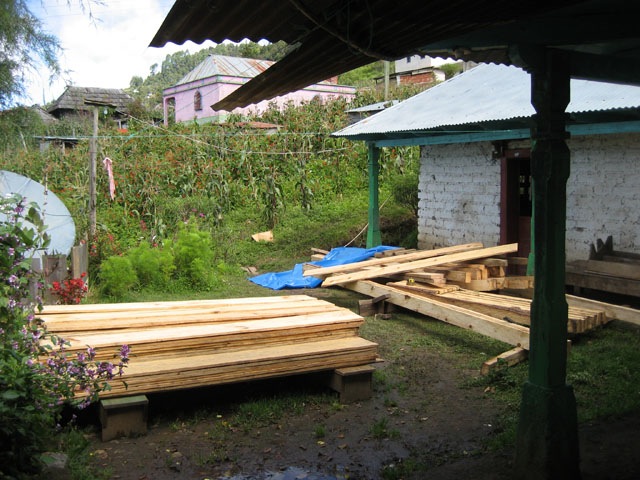 Even our house is not immune; and as Emily mentioned before, they are building another room onto it. Nas Palas’s family is pretty poor, so their new dwelling will be made of wood. All the wood here is bought rough-sawn from Joe Random in the village, since there are no sawmills, and they have to lay it out in the sun for weeks and weeks to dry out the old-fashioned way.
I watched as they worked, trying not to open my mouth. They have a way they like to do things, and I don’t want to interupt. At one point, I just couldn’t help myself, though. They were setting posts to support the house: digging holes, putting in posts, checking height with a string, pulling them out, digging a little more, checking height, pulling them out, digging a little more… ugh, very time consuming and inefficient. Then, they overdug! So they kicked a little dirt back in the hole and reset the post. I didn’t have the heart to tell them that this GUARANTEES settling in the finished house, but I did mention how we’d do it in the US: set all the posts once, a few inches high, then strike a line across all of them with the string. Then simply saw them all off level to match. They scratched their heads, agreed it was a clever idea, then carried on with what they were doing.
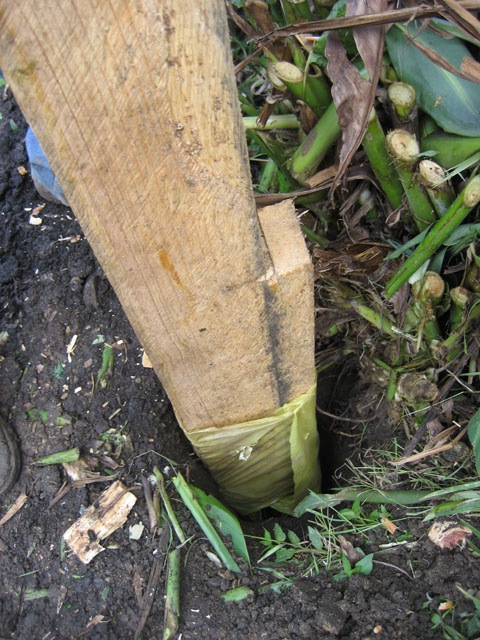
A few of their ideas employ sound engineering, though. Sortof. Here is a post. They leave it wider at the bottom, to spread out the soil bearing area. But why not just leave it wide all the way to the top? The extra wood can’t hurt, and might actually help. And see the plastic they wrapped around the wood? That’s to “keep it from rotting”, though I don’t see how since it’s not sealed and so thin it will be ripped before they even get the dirt in place.
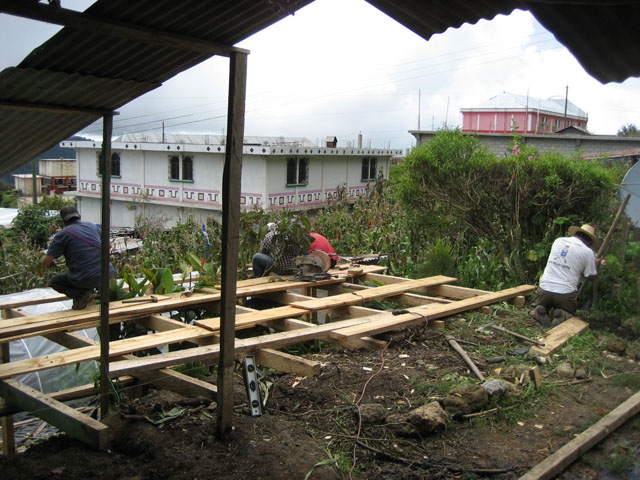
While are on the subject of earth-to-wood contact, here’s something else that is a code violation in the U.S.: they just set the floor beams on the ground. Done! No foundation, no dampproofing, no termite protection. In a high wind, this house will fly away to the bottom of the valley.
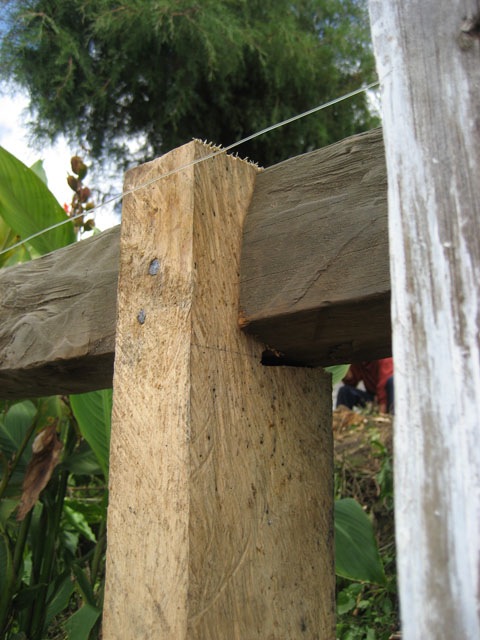
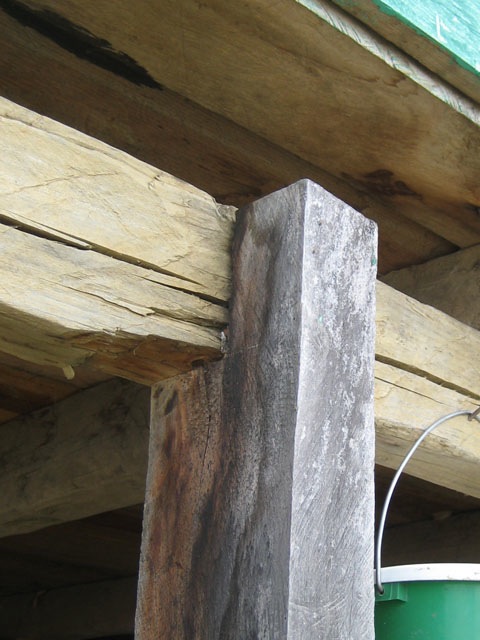
Then we have beam issues, like these. The beams themselves are pretty cool: Nas Palas says they were taken from his grandfather’s house when they dismantled it several decades ago. They are each about 20 feet long! To use them, they cut a beam seat into the post (yes, it’s eccentrically loaded, for all you engineers that are reading the blog) and then realized the beam was still a little too wide. So, in two differnet cases, they trimmed the beam away. WHY!?! They could have made it fit by enlarging the space on top of the post and not reduced the structural integrity of the beam. It belies a fundamental misunderstanding of basic structural principles.
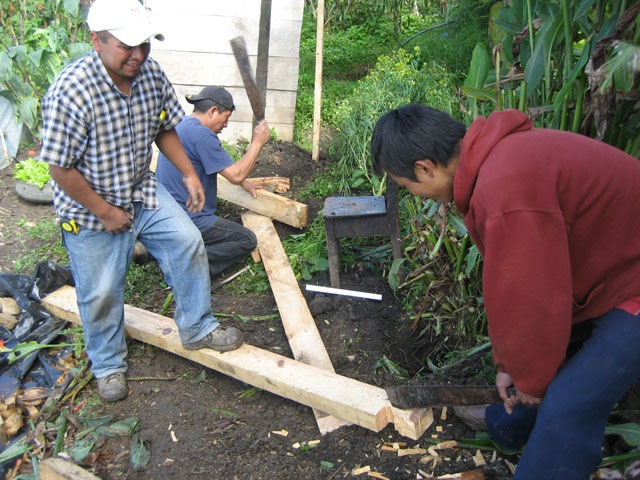 Please don’t take this as disparaging of Guatemalans; they’re very inventive, resourceful people. They just have a different way of doing things and have severely limited resources, both educational and material. I respect someone that can build a house using only a machete.
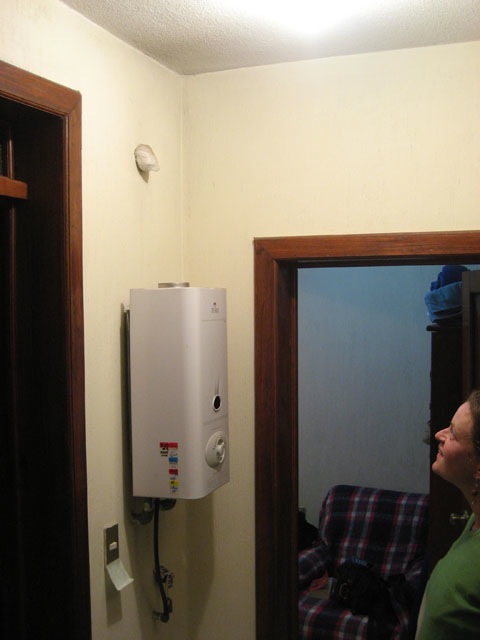 Here’s a few more oddities, from more urban locations. This is an on-demand, manifold type gas-fired water heater. I am a big fan and will have one in my own house some day, even you don’t see them much in the US since we have natural resources and money to burn. What’s funny, though, is that they never hooked up the vent (chimney) for the combustion gasses. If you zoom in on the picture, you can see soot on the ceiling where the combustion products just float out into the room. Carbon monoxide poisoning, anyone?

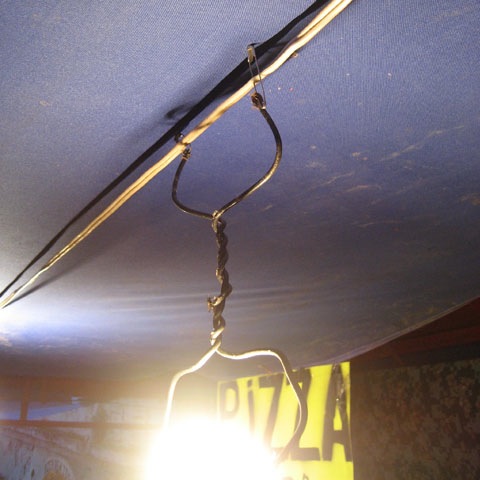
This is a Guatemalan take on the designer European tight-line lighting that is so popular in coffeehouses and bistros all over American suburbia. Can you tell which is which? In the Guatemalan version, they’ve wired a bit of lamp cord to a bulb, then twisted safety pins on the ends of the cord. Those poke through another lamp cord wherever you want a light. At about 2% of the cost of a Bruck system, it’s quite a steal. Unless your shop burns down. But you have to admit, it’s clever.
They’re working on the drainage system in our nearby town, and several of the roads are completely dug up. This happens with a big crew of guys and hoes, and makes for some pretty hungry workers. Nothing a few hot dogs can’t take care of, though.
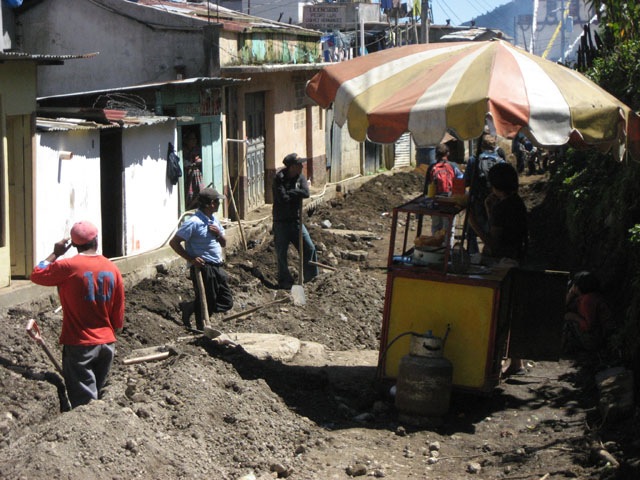
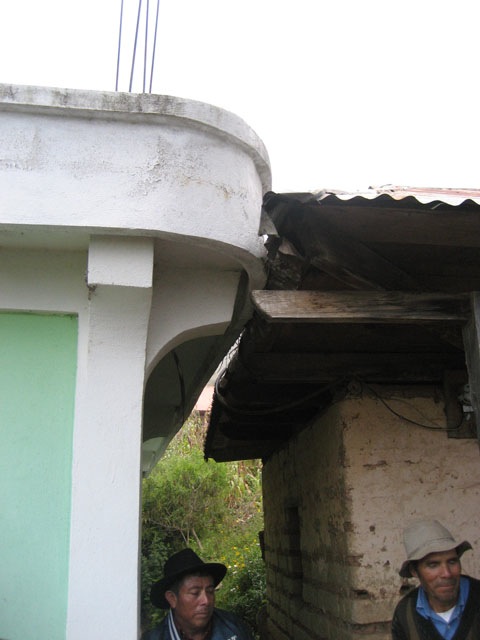
And this last picture is what happens if you leave two buildings unattended, without drivers. They drift into each other like boats in a harbor without helmsmen.
OK, I lied there. But everything else is true, I swear.
1. Jerry teaches me about lots of other cool stuff too, like flyin’ airplanes and fixin’ cars and shootin’ guns.