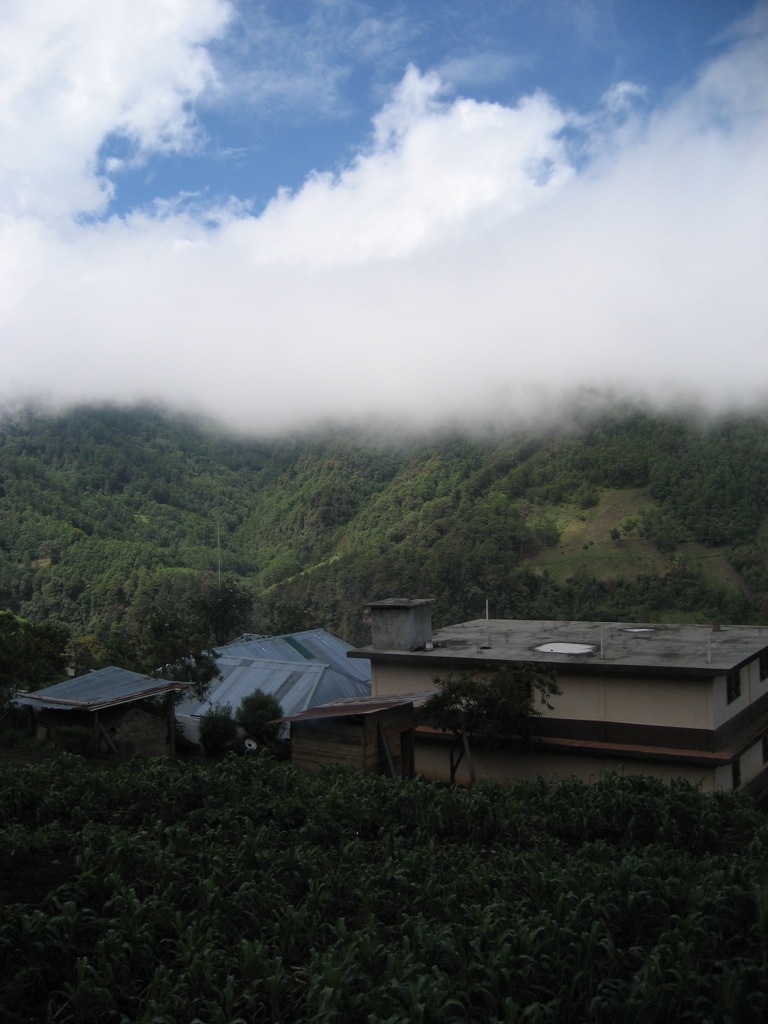
The days go by and somehow I rarely find time to write here. I promised myself a long time ago that I would always write first in my journal where I could be most open, honest, critical, political, annoyed and overjoyed. So you always get at least the second telling, and sometimes it takes a lot of energy for me to do it, again. But also, the last few weeks have been really busy and really interesting, and so over-stimulating that I find myself hiding in books during any free time. Sometimes, actually a lot of times, I find myself standing at our one little window staring out over the growing corn and down into the valley thinking about all the things that have happened and wondering how I will tell them to you. More recently I’ve begun to fear that the stories aren’t really making sense to the audience, that somehow I’ve managed to wade deep enough into what’s happening here that I now suffer a cultural disconnect coming and going. But I’ll do my best to be honest anyway, and from there I just hope you’ll kind of get it. So here was last week:
Monday:
Mondays are generally planning/in-home work days but last week we had an evening community meeting regarding the Emergency Action Plan. The leaders are still trying to figure out the best way to fund this plan, and they like for us to be present at these meetings and to give little speeches as though to say, “Look, the gringos support it, so we should do this!” And we’re cool with that role. We are not, however, no matter how long we are in Guatemala, particularly cool with the way they draw these meetings out for hours on end. I’m currently re-reading the Lord of the Rings series; it’s been about a decade since the first time I read them, and I never watched the movies so I’d forgotten most of the story. But I have this habit of always comparing my life to what I’m reading, and I think I might have just found the perfect term for the meetings: Entmoot. You know, the tree creatures, whose language is unbelievably long so that their meetings going on for days. That’s about about what it feels like. In order to keep us from going crazy, we’ve recently decided to ro-sham-bo (rock, paper, scissors) to see which one of us has to attend the entmoot each time. That means one of us gets to stay home, fix dinner, prepare bath water, and do work or fun things while the other stands in for both of us at the meeting. We’re pretty happy with this system, and everyone here understands that we have to have someone “looking after the house” because, you know, there are ladrones about, and even the Guatemalans want to have dinner ready when they get home from these entmoots. Monday night I lost the ro-sho-bo, and went to the meeting.
A brief story about knitting and bubble gum.
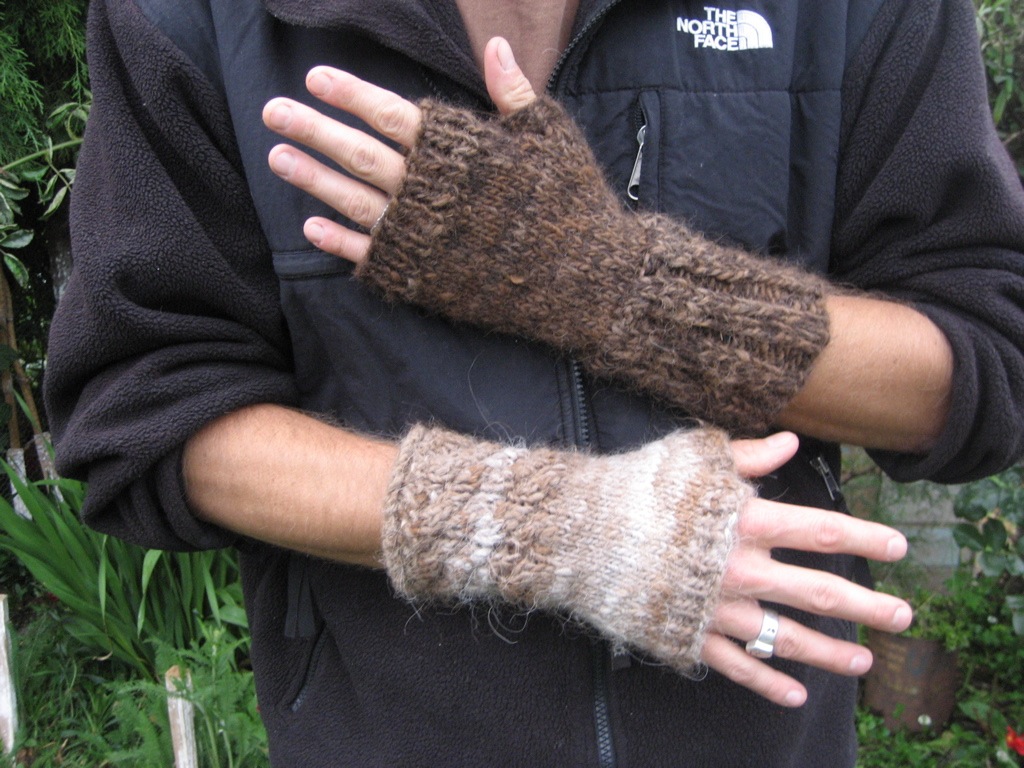
I’ve gotten in the habit of taking my knitting with me, because not only does the meeting take forever, but there is generally an hour or more of sitting about waiting for the thing to start. Luckily, my knitting guru and I outrageously overcalculated the amount of yarn needed for me to knit Fletch’s lopi sweater, so I’ve got balls of warm, soft llama yarn to knit up. I knit myself some fingerless mittens (the light colored one shown below, dark for the Jaimster), and Fletch lost his favorite warm hat so I knit him a new one. Now he wants fingerless mitten as well. The ladies in town never tire of watching me knit, as though it’s some kind of magic. Much like Fletch whipping out his sketchbook and drawing whatever is in the room, it usually turns out to be a good conversation piece. So I sit down in the front of the salon and start knitting, waiting for the entmoot to start. A couple of pre-teen girls across the room make the shhhht noise and hand gesture that means, “Come here,” so I pick up my knitting and go sit with them.
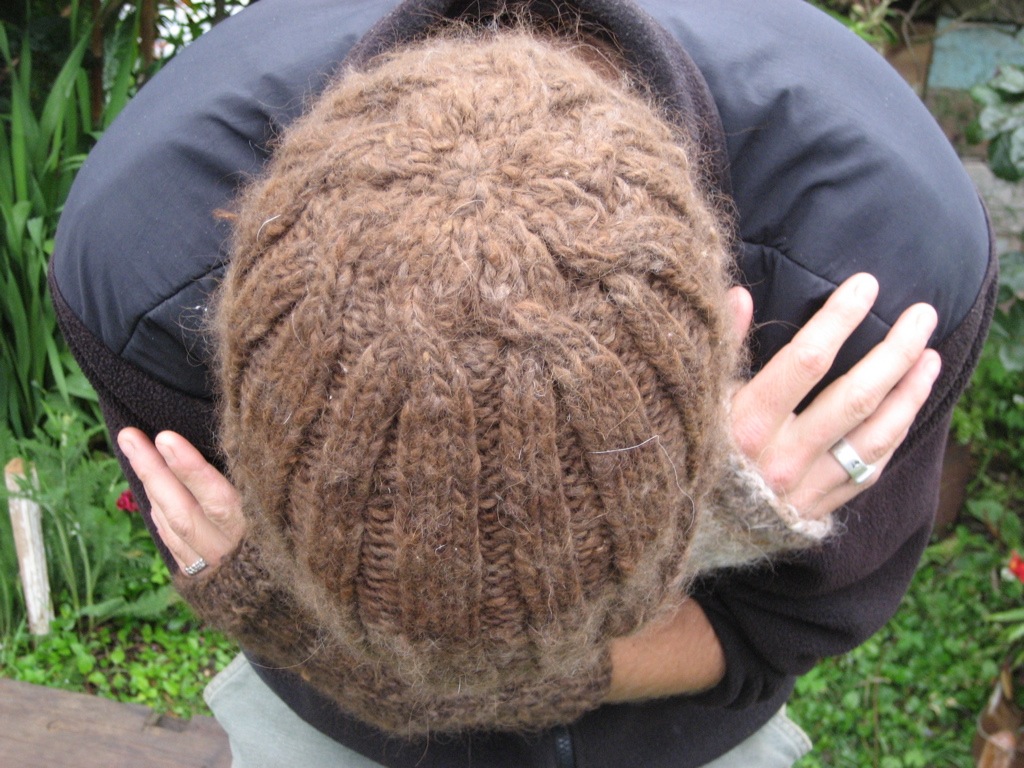
 They ask me about knitting, and we compare it to the much more common crochet they do here. The girls ask lots of questions like, “How do you read this pattern? What does this say right here?” as though the pattern would tell them something important. But it doesn’t, and it’s not that it’s in English, it’s that even an English speaker can’t read the pattern unless he or she knows all the super-secret knitter abbreviations. So then they move on, “How many brothers and sisters do you have?” Thing is, finally, here in Guatemala, 7 siblings is a very reasonable number, after I spent much of my life feeling like my family was absurdly huge. “What are their names? How do you say those names in Spanish? How do you say them in English?” They repeat each name as I say it, in Spanish, and then they try out the English pronunciation. And then they ask me where Jaime is, “He’s working at home and he has to fix dinner.” Very weird, a guy fixing dinner, but something even more curious, “What do you eat?” asked in a way that implies they hadn’t really realized we do eat at all until the very moment the question occurs to them. Tonight we are having veggie burgers, which is a tricky thing to explain. I just tell them beans, and vegetables, “ahh.” That was an acceptable answer. The rain started at the beginning of this interview, and now it’s so loud on the tin roof we’re nearly shouting. It starts hailing, and they teach me how to say hail in Q’anjob’al, saq bat, literally shouting over the din. They ask about weather where I live, and we talk about snow some. Then we have to go back and review this kid thing, which will always come up in every conversation no matter how long we live childless in this community… “Is it really true that you don’t have any kids?” Yes. Pretty weird to them. “How old are you?” So I tell them I’m 25, pretty much ancient for childbearing. I should have at least 5 kids by now, if not more. “How long have you been married?” (for almost 3 years) which then leads to, “So why don’t you have kids if you’ve been married that long?” The standard answer to this question is, “Kids are a lot of work! First I had to finish my studies and then I always wanted to work with Peace Corps. If I get pregnant now they send me home, so maybe we’ll have kids in a few years.” They spend some time calculating this answer, heads nodding as though silently saying, “hmmm, interesting…” but they’re still not sure they understand this answer; local logic does not agree with the words that have come out of my mouth. But in the midst of all the previous questions one of the girls has disappeared, and as I answer this last one thinking, “Reasons to wait 101, for pre-teen girls” she reappears. She shyly places a something in my hand, a big pink knock off of bubble-yum. And now I feel like I’ve passed the test and made it into their secret, gum-chomping girls’ club, or maybe posse would be the better word.
I really enjoy the gum. In the moment there is something humbling about the hospitality of this town, how it’s not just the adults who will always make sure we get something to eat and drink, but even these young girls who will spare 25 centavos between them to get me a piece of gum too. The gum is the kind that fills up your mouth and makes you salivate ridiculously. As a kid I really liked trying to eat all 5 pieces of bubblicious gum at once, and thinking about that, I absentmindedly begin to blow-bubbles, which sends a ripple of giggles through the crowd of older women, most of whom are also chomping gum, sitting around the room watching this interaction they can’t have with me because only their daughters know enough Spanish to put together this never-ending string of questions. A bubble exploded on my face, and remembering the sanitary condition of my hands, or rather lack of, I decide it best to not blow bubbles that require me to pull the gum off my face. But now the women in the crowd are blowing competing bubbles and smiling, and, well, that’s just funny, because they’re 40 and 50 and 60 year old indigenous ladies in traje blowing big pink bubbles. Sometimes I wish I had a spy camera attached to headband so I could take instant funny pictures. Alas, I do not.
Just then, one of the town leaders comes up to shake my hand and sit next to me. The meeting starts, and I’m the first one up to speak, just to let the people know this Emergency Action Plan is a great idea. I do my job to the satisfaction of the town leaders, chomping gum the whole way. I think that probably would’ve made my mother crazy, and it definitely goes against all rules of public speaking I was ever taught, but everyone does it here, so I fit right in. I accidentally chewed until my jaw ached, and I finally spit it out when I snuck out to go to the bathroom.
The End of Knitting and Bubble Gum.
The entmoot went on for hours. I knit as the rain and hail stopped, the sun came out, then the sun set, and men and women kept talking. Apparently the next morning the town was going to have a bit of excitement. According to the Health Committee President, a Swiss aid commission was going to visit town and there was the possibility that the town would get money or projects or equipment or maybe all of the above! There seemed to be a lot of speculation going on. No one knew why they were coming, or how many were coming. They only knew that about 8:30 or so there would be some outsiders visiting the people and they wanted to talk to 12 women, mothers of young children. The town was very suspicious of this singling people out, so they decided together it would be best if everyone came to the health center to see what these people were about and to make sure there wasn’t some miscommunication. They probably wanted to talk to the whole village, and just didn’t know it yet. This was all very funny to me. I had NO CLUE what was going on. I couldn’t get a straight answer from anyone. I wondered briefly why our local supervisor at the health center in town hadn’t bothered to call and tell us any of this, and then realized, he often doesn’t call when I think it would be a good idea, oh well. So I decided to call him and try and get some information. But he didn’t answer. Thus, I remained just as clueless as everyone else. And since the town thought there was a possibility of getting things from these foreigners, someone proposed that there should be a meal prepared for the visitors, as a symbol of appreciation from the people. That led to a great debate amongst the women and the men regarding what food would be fixed. Obviously it would be a variation of chicken soup, but would it be criollo or granja chicken, local or industrial chicken? Should they just buy the food already prepared from the nearest little restaurant about 20 minutes from the village? Which way would be easier, less expensive, a more poignant symbol of the towns appreciation, the better quality meal? So many questions and opinions.
It was dark and cold, and I was hours beyond ready to be home, as most the folks filed out of the hall, but I was stuck with the women still trying to decide whether the chicken should be a local grain fed bird or of the industrial sort, and who had time to get the chicken? I put forth a crazy proposition: that the guys who were on patrol that evening (since all they do is walk around anyway) go pick up the chicken and keep it at one of their houses till the morning when the women would prepare it. “The men will be out anyway, so it makes sense for them to go get it. Then the women won’t have to get up even earlier tomorrow morning since they’ve all got to fix breakfast before they can start making the chicken soup.” The women were puzzled, maybe a little amused by this suggestion. To this Manuel asked, somewhat jokingly, somewhat not, “Emily, why are you always defending the women?” To which I replied, “I’m not defending anyone. We’re talking about collaborating to make a meal. The women are doing all the cooking, and the guys are going to be out anyway. It just seems to me a good way to collaborate, ya know, work together.” He kind of shook his head and went on to other things. I wasn’t sure what was decided in the end, but I figured I’d better get up early because it wouldn’t surprise me if someone came by and wanted me to go with them to pick up a chicken. End of entmoot, finally I got to go home.
Tuesday:
Thankfully, I got up early and no one came to get me for chicken buying. I guess they figured it out on their own. They’d said the visitors would arrive around 8:30, but usually there are lots of announcements over the loud speakers accompanied by siren noises. This morning was no different. The announcements are a sign that everyone is up and going. We still don’t usually understand most of what goes out over the community. I keep thinking if someone here had a sense of humor they would announce directly to our house, “Emily and Jaime come on over, the meetings are starting!” So far, no one has done that. Instead someone whose voice I didn’t recognize, called us asking if we were up and awake and if we could please come to the health center because the European Commision was going to arrive in 20 minutes. Of course we were up and awake and dressed and ready, so we went.
We could see the fancy four by four truck winding up the road toward us. When it stopped, the first person to step out of the vehicle was our supervisor from in town, who we’d been told was not coming. Then two ladina (non-Mayan Guatemalans) ladies stepped out of the truck. This was no Swiss Commision at all. They came into the health center where numerous people from our village had assembled and jumped a mile high with fright when all the fireworks were lit off outside in honor of their arrival. Since this has all happened to us here before, it was really funny to watch someone else who also didn’t have a clue go through the whole routine. The unpleasant looks on their face almost made me laugh, but I had to stifle it so as not to interrupt the welcome speeches.
The women announced that they worked for the Organizacion Panamericana de la Salud, or the OPS, which is a Latin affiliate of the World Health Organization. I kept wondering, where on earth did they get the idea this was a Swiss/European Commission that was coming to give them money and/or gifts? In general, the WHO doesn’t do crazy gift giving, so I didn’t figure the OPS did either. I was right. There were two women. One asked to speak with a group of 12 mothers of young children, the other woman wanted to speak with the newly formed Emergency Action Plan Committee (this wasn’t even planned–I’m so proud of our little community for putting the EAP together just in the knick of time to have it evaluated, totally coincidental). One very soft spoken town leader stood up and asked, “Are you sure you just want to speak to 12 women? We do things together in this community and for that reason all of us have come here this morning to talk to you, as our guests. Are you sure you don’t want to talk to the whole community?” The woman then explained to the best of her ability what a focus group was (for statistition/survey purposes) and that indeed she could only speak to 12 women, though she was impressed that so much of the community came out to meet her and her partner. The town decided that those who were not in the focus groups would sit in the health center and wait for a report of what happened when the groups finished their interviews. Fletch and I decided I would go with the women and he’d go with the EAP committee to see what was this was all about.
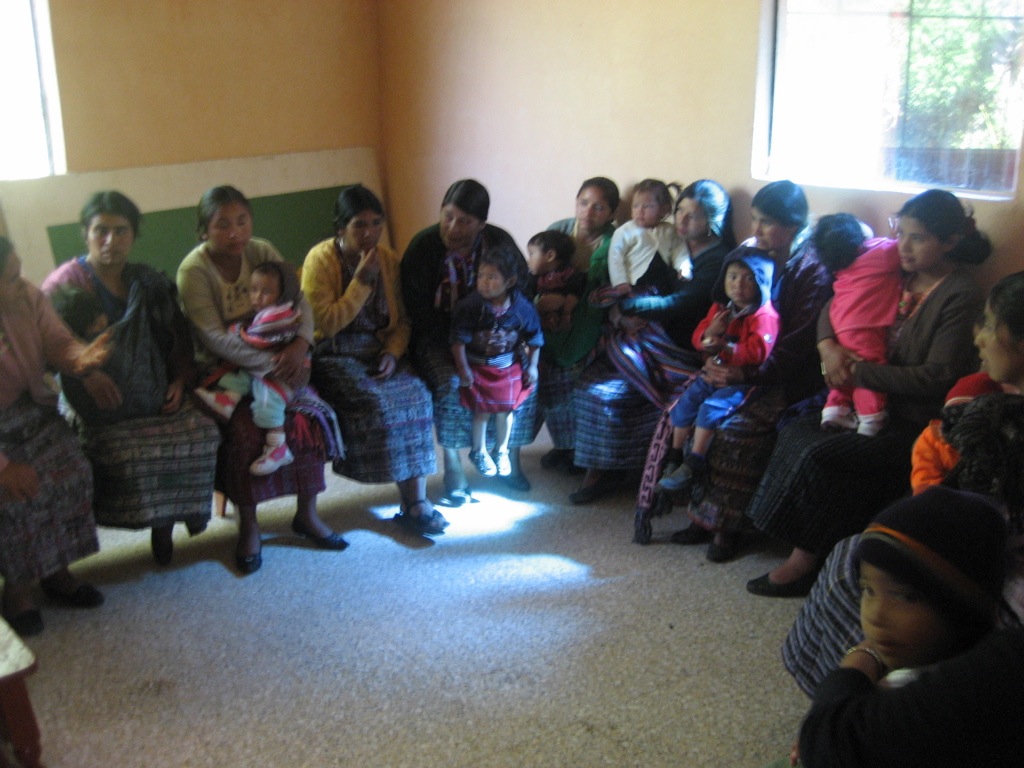 Far from coming to see the community and shower them with gifts, these two committees were formed as focus groups that the OPS interviewed as a way to evaluate health services and health education in the community. There were neither gifts nor money offered to the community. In the women’s group the OPS rep encouraged all the women to talk and participate (as I thought, good luck with that Ma’am; participating isn’t really their thing here). She set up her tapes to record the entire interview and began asking them questions. I did not say a word for the hour and half we were in our little interview room. Well, I did say some words, but only to our supervisor, who was there to translate. These ladies seemed to be in a big hurry, and I was certain no one thought to tell them in advance that a meal was being prepared in their honor. I decided Aurelio needed to be aware of this so he didn’t end the interviews and usher them out and miss the food. When I told him, he looked surprised, and worrried. “I’ll go tell the ladies to hurry! We have to get to another community two hours away after we finish here. Hijole!” This last expression means, “crap!” He ran away and then came back to start translating. These are some questions she asked:
What are the most common illnesses here in you community? She had to ask this question about five different times, rephrasing and re-rephrasing it because the women wanted to talk about pregnancy complications, which is a health issue but not classified as an illness. The answer this woman was looking for was acute respiratory infections and diarrhea. What I found amusing in a way that was comforting, like I’m not the only one frustrated by this, was at one point during this very first of a series of questions she looked at our supervisor who’d come in to act as translator and said, very flustered, “They’re not answering the question?!” All I could think was, “Welcome to my every day life.” Thankfully, for everyone’s sake, they caught on to answering the questions appropriately.
What have the health staff done for the community so your children don’t continue to suffer illness? What institutions other than the Ministry of Health work in your Community? What is their job? What changes have you seen since they began? What was the health situation like in your community years ago?
I was really proud of the ladies here because they jumped right in, excitedly talking about us. “Emily and Jaime work here… They teach us about keeping our houses cleaner, about personal hygiene, hand washing, about better nutrition. They work for…Peace Corps?..Yes, Peace Corps, and they’ve been here almost one year, but they’ll be here for 2 years before they go home… They came here to give us health talks to teach us how to improve our lives… Now we feed our children better because we know we shouldn’t give them just any kind of food you can buy on the street…(at this point, I was thinking, Go, Ladies, GO!)… The difference in the health situation now is that we get the charlas, but some people still don’t change their habits so the illnesses continue, and sometimes mothers don’t come to the health center for advice; children are born malnourished and they keep getting sick because of this malnourishment.”
So the conclusion we’ve reached is that illneses continue because people don’t use the health services or follow the health talk advice, is that right? This was my favorite question ever! All the ladies nodded their heads saying, “Kay tu, kay tu“, which means “That’s it. Yes.”
The woman also asked a series of questions about abuse. I was really interested in hearing what the ladies had to say based on my last post on that very subject. Are there cases of abuse? Does abuse happen here, and if so is there support for the health staff? Is it because of alcohol? Because of drugs? What do you do when women suffer abuse here? What do you do to help that woman?
And the ladies responded, “We’ve heard rumor of cases of abuse.” They all sat, solemnly nodding their heads as the OPS rep asked again But does it happen here? “Yes, it happens here…Alcohol causes abuse, especially to pregnant women, we’ve heard…The nurses help us. They say that we can bring our husbands in for a talk…But they can’t really offer us any kind of support…If we see abuse here, we just try to get the children away from it…If a woman suffers, we can’t really help her, well, we just say we’re sorry…Yes, we tell her we’re sorry she has to suffer this.”
There were more questions, about whether they’d been taught about Sexually Transmitted Diseases, specificaly HIV/AIDS. We haven’t gotten there yet, but we’re on our way. We’re doing STDs and HIV/AIDS after we’ve gotten through family planning: why it might be a good idea; how the reproductive system works to make a baby; what methods are free and available; how those methods work in the reproductive system. And the interview ended asking detailed questions about the health centers hours of operation here and in town: what they do when their kids get sick outside of these hours; about the Emergency Action Plan and how it works; about whether or not they recieve support from the Municipality. One women responded to this last question saying, “I don’t think they know about our health needs, but I think they’d help us if they knew.” Another women, a little older, a little less starry eyed, said, “They make us all kinds of promises during their election campaigns, but they’ve never fulfilled even one of their promises.”
In this meeting I found that for a family to pay for transport to Huehuetenango, to the closest fully equipped hospital, the cost is 700 Quetazales one way, and 2000 Quetzales if the family wants the transport to wait and take them home. This is astronomical for families who make 30Q/day about 3 or 4 days a week, and have to feed their families to boot. Most transports demand up-front payment. This is the main job of the Emergency Action Plan, to have funds ready and available for an emergency. Our municipality has been waiting on the new ambulance to arrive for over a month now. The ambulance would be free to all, but when it arrives, there will be one ambulance for approx. 47,000 people. The trip to Huehue takes about 3 hours from town center to town center. I guess in those six hours we just hope no one else needs emergency transport?
The set-up, funding, organization, and management of the Ministry of Health is really a marvel to me. It is so astoundingly far behind even the most mediocre services offered in the U.S. But I can say with utmost confidence that they’re working on it. We’ve been so fortunate to meet and work with very dedicated, conscientious healthcare providers who constantly do the best with what little they’ve got. It seems that most stall-outs and delays happen due to funding coming from a national level. This is the acute challenge, I imagine, for most third world countries. How do you make what little money you’ve got stretch to all corners of need? This is a challenge for the United States as well (more and more these days), but we’ve got so much more to work with that the problem is largely masked by the infrastructure available to us. When I take the time to sit back and think about these things I’m generally dumbstruck. It is at once overwhelming and one is tempted to ask, “How will they ever overcome this problem?” But I just mentioned the health workers. This is where overwhelming problems need to be broken down to manageable parts. The individual health workers hold this system up, and where the workers are less dedicated and conscientious that’s where the system truly fails. So, in a way, this dilemma really highlights the power of the individual.
Between the interview and lunch, our health committee president came to ask some advice of myself and Jaime. He gathered us around with a few other town leaders and an old woman who’d been sitting in the health center. Then he explained that this woman’s daughter had been hit in the face by the old woman’s grandson and her face was very swollen. Manuel wanted to know if we should transport her to town for a doctor exam. We said we thought that would be a good idea since facial swelling, especially around the eye, can cause blindness if it’s bad enough and not treated. He seemed happy with this response and translated it to the grandma. She looked and him and said, “I already took her to town. They say she’ll be fine.” Manuel looked surprised, “Oh, then we’re done here, ok.” I said, “Wait, wait, wait. Who is the guy that hit her? Is it the woman’s son or her nephew, and why did he hit her?” Manuel looked at me, annoyed with the hold-up, “We don’t know; that doesn’t really matter.” I was not going to let this drop, “If you’re consulting us for health advice, and we’re here to practice PREVENTIVE health, then we need to address this. We need to find out who this guy is. If they leaders want to do something to help this situation, two or three will go talk to this guy and tell him that hitting people just because he feels like it is not acceptable in this community. It’s a matter of health and safety for everyone if we let this continue.” Kuddos to Jaime he totally backed me up on this one in front of Manuel after the big M responded, “We can’t do that. He wouldn’t listen to us anyway.” Jaime told him he thought my suggestion was probably a good idea, or they’d just have to figure out how to transport someone else later for the same problem. “Well, we can’t do that. She’s seen the doctor. We’re done here,” and Manuel literally clapped his hands together and walked away. I didn’t think my suggestion was so unreasonable seeing as how this town has its own citizen patrol and would punish anyone they decided deserved it through vigilante justice. Why, then, is it not acceptable to establish rules against physical abuse in our community? Sometimes I wonder if, when we’re done here and we go home, the guys here will be sort of glad we came, but also a little regretful they ever asked me questions and had to listen to my responses.
We had the opportunity to share a meal with the OPS reps. and talk with them a while. They were really happy about our program and what we’re trying to do. It’s nice to get outside encouragment, but I enjoyed their visit immensely because it finally added legitimacy to something I’ve been trying to get across to these women since I arrived. I always tell them, “You’re thoughts and opinions, your questions and ideas are important! We need to share these out loud in a group. If we work together then we can begin to solve some of our problems and in that way we can enjoy happier, healthier lives.” An international aid organization came, and they wanted to talk to the women, not the whole town, not the town leaders, who are men. They spoke to the women. It was great. After our delicious meal of chicken soup (they went all out for the local, grain fed chicken) and tortillas. We went home to rest for an hour before we had to come back for the women’s charla.
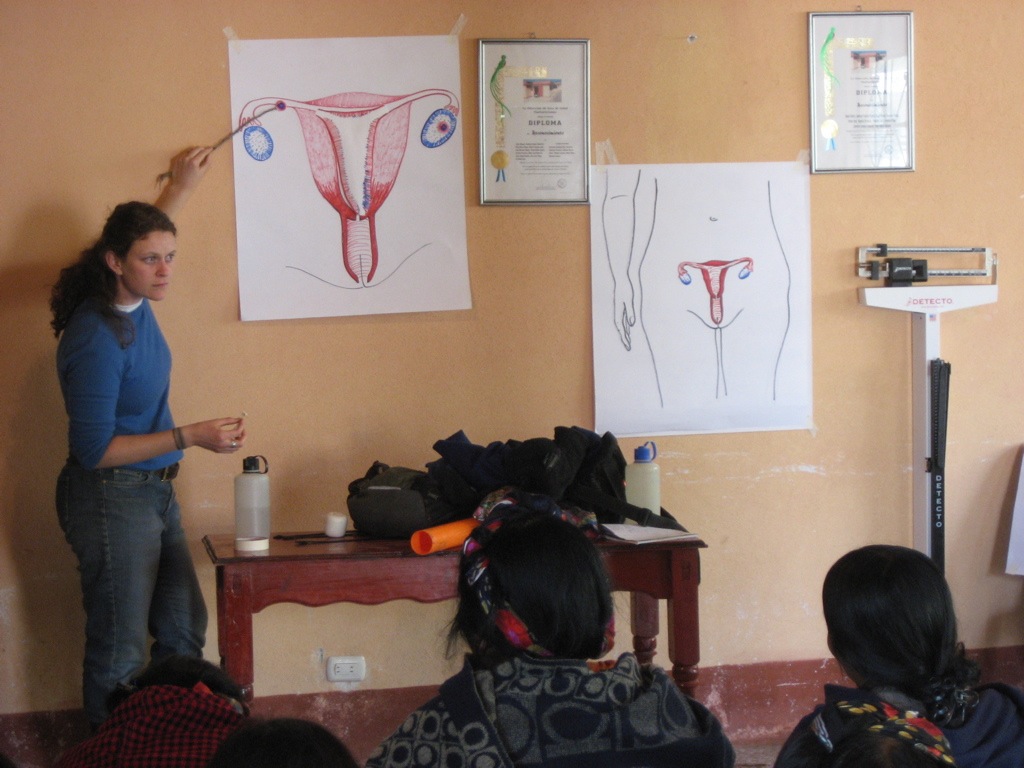 That afternoon’s talk was “How Pregnancy Happens”. It was one of the best talks we’ve EVER done here. Fletch had drawn two posters of the female reproductive system, one inside of a body for scale, and a separate close-up diagram. The whole point of the talk was to explain to them what their reproductive system looked like and how it functioned. This is stuff I started learning in fourth grade at 9 years old. Most of the women in the room, some mothers of ten and twelve kids, up to this point didn’t know anything they couldn’t see with their own eyes. So they knew menstruation blood, and pregnancy, and some know what births look like. We did a review on why family planning might be a good idea for young, middle age, and older women. Fletch and I talked about our own decisions regarding family planning and why we don’t have kids yet. Then I told them if they want to begin to try planning their families they needed to know how they get pregnant in the first place. I walked them through the journey of the egg from the ovary through the next menstruation, talking about how blood builds up, like a lot of pillows on a comfy bed, to make a safe place for a child to grow. Then if the egg doesn’t meet up with the man’s seed (literal translation from Spanish), we have a period. I showed them where the baby grows, in the womb, and where their vagina is, and how the man’s penis does not reach into the womb. Their eyes were HUGE. I had everyone’s attention, in a way that pretty much never happens here. I explained a non-pregant cycle, then I went back and explained a pregnancy. When I finished I asked them if they understood it, or if they wanted to see it again. One fiery, little lady (mother of 12) who cracks us up on a regular basis making light of the charlas said in the most serious of tones, “Explain it again, because this is interesting, and it’s not a sin to talk about this.” Go, Matál! So I explained the whole cycle again, without the pregnancy, and then with the pregnancy. I watched their eyes light with comprehension. This was the first time they’d ever seen a thing like this, and suddenly a whole knew world of understanding openend up. I was so excited for them.
I asked them if they had any questions. One woman said, “It’s just that we’re a little embarrassed to talk about this.” I told them that was just fine and normal, but if they had enough confidence to ask their questions in a group rather than one by one later, everyone would end up learning more. We then said, “If you want, if it would make your more comfortable, Jaime can leave and we can ask questions just amongst women.” I loved their response to this! They all agreed, “No, no, no, we like Jaime. He’s good. And it’s cold outside, so he should stay here with us.” 🙂 With that the barage of questions began. How is it then, if only one egg comes out, that sometimes women have twins? Why do some women lose their babies before the baby is fully grown and ready to come out? Why is that the woman only releases one egg and the man releases many? What’s fun to me, maybe for the novelty, is that teaching reproduction to a group of Mayans who basically worship corn means that you can draw reproduction analogies for almost everything from how they plant and cultivate corn. To this last question I said, “If the mother earth is one part of growing corn, we’ll say the woman’s part in making a baby, how many corn seeds to you put in one mound? Just one?” To this they said, “Six or seven seeds.” Exactly, if you put more than one seed in a mound then it’s more likely you’ll get one healthy corn stalk growing out of that mound.” Likewise Family Planning analogies also come from the milpa, or corn plot. “When you grow corn, do you put the mounds very tight and close together, or do you space the mounds out?” They space them out, because if they were tight together the corn stalks would not grow healthy corn, and the earth would be sapped of energy to produce corn. That’s how it works with women and baby-making too! The women really seem to understand these analogies. They stayed in the health center asking questions, for once ignoring their whining, restless kids (the kids were whining and restless with good reason; we’d been there FOREVER, entmoot-style) to ask more questions and get more answers. I answered them until they were all out of inquiries. The talk lasted for some 3 hours, and it was designed as one of the shortest talks we’d ever given. Fletch left early to start preparing dinner while I stayed on.
When I finally came home I was bone-tired. My back hurt for standing so long, my throat hurt from talking so much. It was a satifying day, all in all, but so exhausting. For the last few weeks, after every charla, once the general questions are done, women have begun to usher me into private corners of the health center and ask their personal questions about family planning, so I’ve kind of become a birth control counselor. I really like that. I think it’s immensely rewarding. One of the trickiest things about family planning is that its such an individual decision. Some women have terrible physical problems due to the birth control they use, which scares other women out of trying it at all. Some women don’t have any problems at all and are terrified it’s secretly tearing apart their insides. They want to be comforted, and validated. And in a society like this one, where everyone strives, at least outwardly, for a great deal of equality, encouraging individual-based decision making is a really new concept. But if this, or any, community is going to have success with family planning they need to know their options, and know that it’s ok to use something other than what their neighbor/sister/best-friend is using. Personally the job is challenging because the most popular form of birth control in use here is the shot, depo-provera which women get every 3 months. I, personally, think it’s one of the harshest, most damaging forms of birth control available world-wide, for short and long-term effects on women. But I feel it would be irresponsible to go into reasons why in front of these women, because for many of them it’s the perfect answer. Often they can’t choose what kind of family planning to use as a mutual decision with their spouse. The shot is something completely hidden and incredibly low maintenance with a staggeringly low fail-rate. For lots of them it’s a good choice. Should I bother to tell them about bone density depletion, lack of libido, severe weight fluctuations, and depression that are common side-effects to this method? In other words, should I scare them out of using the injection so they have as many pregnancies as possible, try to raise 10 or 12 kids in abject poverty and die early from illnesses complicated with malnutrition? I think that is unwise. I tell them that some women have bad side-effects from “medicinal” birth controls, and for that reason they need to come to the health center and talk to the nurses about the side effects and what can be done to minimize them or change methods. But that’s all I say. In the states if someone asked me about the shot, I would likely go on a rampage about how I think it should NEVER be used by an independant woman who has so many choices at hand. So in my exhaustion, I was thinking through all of this stuff, and then gave up. I read for a little while about the adventures of hobbits and went to bed because the next day we had two health talks scheduled.
Wednesday:
We’ve been discussing for quite some time the idea of starting the health talks in the school. I’d planned them for the week before this and then had to cancel them to go judge another school-sponsored beauty contest at the big Catholic school in town. The school was celebrating it’s 45th anniversary. It was the first major educational center in the municipality, started by North American priests and nuns. In short, the beauty contest was a bigger deal than teaching kids about health on that particular day, according to our supervisor who was also judging…soo we rescheduled our talk for Wednesday morning. The intro talk we do is, ideally, really fun and interactive. We were looking forward to working with kids because they’re usually tons of fun. Also, we fancy ourselves as being really good with kids, so this was going to be an easy, fun and fast little venture.
HAH! The joke was on us. We went in happy, with lots of energy, and we fell flat on our faces. The warm-up game went alright for first times. Then we did the little skit with participating volunteers. No one laughed. No one seemed to have any reaction at all really. Just a room full of 50 blank stares. But the worst part was yet to come: the review questions. Not a single student would (if they could?) answer one question. We joked, we laughed, we gently teased, we prodded for responses, and there was NOTHING BUT DEAD SILENCE. I broke out into nervous sweats, and Fletch stood back and let me try and keep going as two of us working to get answers from them felt like we were being overbearing. I thought, “Hey, I’ll ask the teacher a simple question to show the kids how it’s done.” The teacher, who participated in the little skit, could not answer a simple review question correctly. The question was something like, “Teacher, since you were a worker like all the other workers, and you earned 30 quetzales a day, why did you have so little money at the end of the week?” The teacher’s character got really bad diarrhea and couldn’t go to work and had to spend money on medicine. The teacher acted that out in the skit, but the teacher couldn’t answer the question?! We made more jokes, tried to cover up our disappointment, attempted to approach the questions differently, passed around a lime and the person who had it was supposed to share his thoughts on the skit. Something as simple as, “It was funny,” or “It was dumb,” would have sufficed. NOTHING WORKED. NO ONE SAID A WORD. NOT ONE SINGLE WORD! I wanted to burrow into the ground and never come out again. We ended up asking the questions and answering for them. Then we gave our closing remarks and left. I felt like I had been pummelled. I can’t adequately describe the my feelings of defeat. And this was something I thought I was good at? I was sweating and shaking and I wanted to lock myself in our house for the rest of the day. It was about noon. We were supposed to come back to the school for another talk the next day at 11.
We had another talk scheduled that day in the neighboring community at 3pm. I tried to read and distract myself entirely until we had to prepare things to go. The charla there was another, ideally, simple and fun talk. It was a scavenger hunt charla where the audience ends up presenting health pros and cons for each item they have to find. It’s a review talk since, at this point, we’d done some 4 months of health talks with them on a wide range of topics. Also, this group has proven itself to be really fun, and participatory, so there was no reason this talk should make me miserable. We started gathering up the materials we needed, and putting on our hiking boots to go. Here I was in the very middle of the week, and I will be completely honest here and you can judge me as you will: I broke down. I literally started bawling uncontrollably. I didn’t want to leave the house. I didn’t want to face another crowd. I felt exhausted and awful at my job and like I just couldn’t stand another two hour session of trying to teach wondering the whole time if they really “got it” or not.
Luckily, we work pretty well as a team. It usually happens that when one of us is really, truely upset about a thing, the other person remains calm and supportive. I was curled up on the bed crying, and Fletch was very matter of fact. “Just stay here and do what you need to do, or don’t do anything. I’ll go give the talk. Just call them and make sure they’re all going to show up before I walk over there, and I’ll go do it on my own, ok?” I stopped crying long enough to make the call, and Fletch set off to give the talk. I felt miserable, thinking about kids who couldn’t answer simple questions, and boys who hit their mothers and aunts and wives, and how this job feels so freaking impossible sometimes. We were scheduled to go to dinner at the house of one of the community leaders that night, at 6, so I knew I had a few hours of sanctuary before I really did have to leave the house again. I fixed a cup of coffee, wrote feverishly in my journal for a few hours, crying off and on. I began to plan a route of escape, a reason to leave town. Sometimes I feel like being here is like holding your breath underwater, and I have to come up for air eventually, i.e. get the hell out of Dodge, or Temux as it were. We were out of money, and pay day was the end of the week, and I thought I could just go all the way to Huehue, instead of the just two hours to the “local” bank. In Huehue I could meet up with some volunteer friends for the best chocolate cake in Guatemala right off the central park, and that might cheer me up some. I let this plan simmer in the back of my mind, quietly debating whether I should come up for air or just try and stick this one out, as my hours of sanctuary came to a close.
Fletch came home from the talk to report that it was indeed a load of fun. I was glad it went well, and though I regretted not having gone, I was mostly relieved that I stayed home. We had to get to Don Simon’s house pronto, as we were already about 20 minutes late–pretty much no big deal to them, though they did tease us about being a little late.
Don Simon, or Cham Ximon as he’s called around here, is definitely one of our favorite town leaders. He so quiet and reserved, but when he speaks, no one in town says a word. They listen. His house is one of the best equipped houses in town, though it’s only one story *gasp* rather than two or three stories high. He welcomed us into his kitchen saying, “My wife and I have talked about having you two over for dinner since you arrived, and we could never decide when to do it. But now that Luis is visiting from the US and you said you wanted to meet him, I think it’s a good time to finally invite you to our home.” I don’t know if you know what I’m talking about when I say this man has sparkly eyes. He has the most tranquil looking face of anyone I’ve met here, yet his eyes glitter as if to indicate some constant, quiet activity, thorough consideration of the matters at hand. At the same time, it seems like no matter the outcome, he’s already at peace with everything that will be decided. We really like being around Ximon. As per our customs, we brought them something as a gift to the hosts, a pan of banana bread that almost didn’t make it to their house. Apparently if one walks the main road with food in hand, they’re trying to sell it. We had a lot of people ask us what we were selling, pretty eager to buy. I guess we know what to do if we need some extra quetzales in the future (just joking…that’s totally against PC regulations 🙂 .
Simon and Anna married when he was 20 and she was 16; together they have 8 children. Neither of them have ever attended a day of school in their life, and while Simon speaks a little bit of Spanish, Anna speaks none at all. They raised their children on the little bit of money they were able to make working on the coffee fincas during harvest, and farming here in the mountains for the other 9 months of the year. Simon said that the coffee finca is where he got his education. The supervisors and bosses liked his work ethic so he got a position as a lower-level supervisor and through that position over the years he learned all the Spanish he knows. He made sure to tell us, “I understand what I hear, just about everything I hear, only I can’t speak it very well. I can only speak a little…For us here, life is hard. There’s a lot of suffering. Anna and I talked and we wanted our children to study because we never studied.” The two share a very deep belief that people must be invested in the betterment of all, within their families and within their communites, and they have spent their married lives working to instill this idea in all their children.
Their son, Luis, would get the prize for World’s Best Immigrant, if such a prize existed. I would nominate him personally. His story is so ideal. Luis lives and works just outside of Portland, Oregon; he works there legally now. He’s had his papers for several years and is waiting for official citizenship in the US before he comes back to Guatemala for good (and yet will always have the option to go back if things go bad again). Luis went to the United States in 1988, when he was 16. Then times were bad, but the worst years of the conflict had passed. He left with a group of Cuotanecos from across the valley, and learned how to speak Chuj so he had someone to talk to in the US. He says he’s worked all 21 years in and around Portland, which is unusual. Most men seem to migrate all over the country following work leads for 5 or 6 year stretches. He arrived in the US and started working. I asked him if he has a home outside the city and he looked at me and said, very matter of fact, “I board with a Mexican family there. I don’t have a home. I send all my money back here. This is my home.” Luis sent so much money back that he was able to send all of his 7 siblings to school. There are two secretaries in the bunch, two school teachers, a doctor, a nurse, and a health technician. The money he sent home also built the comfortable house the family currently lives in. Luis has no degree or official title to go with all his work, but all his siblings do. “Do you think going to the US was kind of like going to school for you, though? Have you learned a lot there?” He agreed that sounded accurate. He’s had quite a few experiences most people in his family can’t even imagine. He’s suffered loneliness and homsickness that trumps us any day. Just like his dad said, “We suffer here. Life is hard.” But Luis was determined that his family have something, and he’s very content with the fact that their accomplishments are his too. “My brother is a doctor. He had to fight for that. I don’t know if you know, but there is a lot of racism here. We’re Mayan, and we have to fight for what we have.” Luis’ demeanor is so similar to Don Simon’s, when they say “fight” it sounds pacifist in nature. They are such gracious but proud people.
After all his siblings finished school and the house was built, with the money he was earning he bought and stocked a rather large store in the center of the main town 40 minutes from here. The store is located right on the square where all public transport picks up passengers, so it sees plenty of business. Luis doesn’t want to stay in the US. He’s never bought a house or a car. He doesn’t have an American wife or girlfriend. He married a girl from here and has a 7 year old son and 1 month old daughter (his last visit was about 10 months ago, go figure). ” There’s no work there now, so I came home to visit. The food tastes better here, and things are less expensive…I’m not going to be in the US much longer, but I’ll stay until I get my citizenship, so I know I can go back if I ever need. Then I’ll move back here. It should take another 2 or 3 years. I want to live in Guatemala. This is my home.”
I think there are so many disastrous immigrant stories, it’s nice to hear of one that was so successful. He managed to improve the quality of life for every single member of his family. And he’s not abandoning them to live a life of comparative luxury in the states; he’s determined to come home. This family in general is pretty cool. In spite of everything they have, Simon and Anna are still involved in all the community events, trying to improve things for everyone else still, because that’s just the way they believe they should live. Simon added at the end of the evening, “I think you two must have good parents too, if they taught you to help people, and here you are with us. We thank you very much for coming here to share in our poverty, to learn about our culture and our lives.” By this time it was almost 9 o’clock. Anna was falling asleep in her chair by the fire. We made some small talk, said our good-byes, then walked back down the road in the dark, quiet of little Temux Grande. It was a happier ending to a difficult, tiring day.
Thursday:
Here I will admit, we were supposed to go back to the school. We busied ourselves with small tasks all morning to not think about it. The thing is, I set these talks up with the director, and he was myseteriously absent the day before. The Asst. Director didn’t seem to understand what was going on in the first place, which made me think, maybe we should just wait until the director is back and I’ll talk to him? Really, I was trying to find every excuse in the world not to go back as I cleaned the house after days of neglect. Then, as happens so frequently, someone unexpectedly stopped by just as we were supposed to be leaving. I took it as a sign. So I admit, I’m no Super-Volunteer. I ditched the school, feeling I had adequete culturally appropriate excuses for not showing up and asking their pardon and starting on a day I was better prepared for the difficulty of the job that is working with kids here. Even after the ridiculously pleasant dinner with Anna, Simon and family, I was experiencing some drowning sensations and considering my plans for escape. Should I stay or should I go?
Then we had a second un-expected visitor (some days they come one after another, like there is a hidden line somewhere, and as one visitor exits the house another visitor comes slowly, smiling up the path to our house). Don Marcos came to announce, much to our surprise, that all his materials were in order, the last bit of sand he was waiting for had arrived, and he was ready to start building his latrine. When could we start? “Tomorrow, of course!” answered Jaime.
At this point I decided I should go to the “local” bank the following day, and be around for the weekend of construction. I wanted to know how the whole thing goes together so I’m clued in when we build our own composting latrine. I just had to hold my breath a little longer and be ok with that. It helped that the week was calming down on it’s own.
Friday:
Running errands here means an entire day of running around, waiting on buses, lugging the food and goods we purchase. You’ve gotta be friendly to everyone you meet, make lots of small talk, suck it up if the micro-bus driver cheats you out of 5 or 10Q for hauling lots of things. I had a relaxing morning and tried to enter my Zen state before leaving the house. Things went relatively smoothly. The sun was shining bright all day. The bus rides were hot. But I got our dinero and food and even found a few rare items like bacon and mozarrella cheese for Friday night pizza and Saturday morning breakfast. yum. I went alone to save some money and so Fletch could work with Don Marcos to lay the concrete for the base of the latrine. By 3 pm we were both home and worn out. Though he told me working with Don Marcos was one of the most tranquila experiences he’s ever had working in Guatemala. “It was amazing. We had all the supplies we needed. When he didn’t have a tool, he took two minutes to run and borrow one from the neighbor. We had all sorts of interesting conversations, but we just worked steady all day. It was great. I think you’ll like it if you come tomorrow.”
Saturday:
And so I found myself, shortly after our tasty, greaseball breakfast of bacon and fried potatos, walking down the road to Don Marcos’ house. We were going to lay the concrete blocks that make the composter boxes. Fletch had informed me this would be a half day job. I’m sure if it had been Fletch and I working alone, it would have been. But it turned out well enough.
I didn’t realize this until we were working but Don Marcos, in his very even-keel manner, was totally stoked to be laying these blocks, “I’ve never had the chance to do this before. No one ever showed me. This is pretty easy,” he said, but you could sense he was excited and pleased. And Fletch was right, the guy is a completely stress free steady working kind of guy. The guys squared off and layed the first layer of block, at which point I had to tell Fletch he needed to make room for me to work also, or I had to go home so I wasn’t bored out of my mind. He let me in to work, and just as things started flying Don Marcos said, “Ok, let’s take a break, we need some atol.” Atol is Mayan energy drink. [I like to think of it as a “corn smoothie”. Yuk. -fletch] They drink it mid-morning and mid-afternoon. It can be made of any number of things, rice with sugar and cinamon, toasted and ground wheat with or without sugar–with cocoa powder if one wants to get really fancy–, but most commonly it’s made of corn, sometimes sweet, sometimes not, sometimes with fermented corn. For the record, I hate the fermented corn atol, I enjoy the rice with sugar and cinnamon, and I’ve only heard rumor of the wheat cocoa atol, never had the chance to try it. Fletch and I gave each other a pleading look that said, “But we just got started!” before we made peace with the fact that, we’re working on Guatemala time, baby. So we washed our hands and followed Don Marcos into a shady little room with a table and three chairs. His wife and daughter served us all our atol and a little muffin, and then we sat talking for an hour before going back to work.
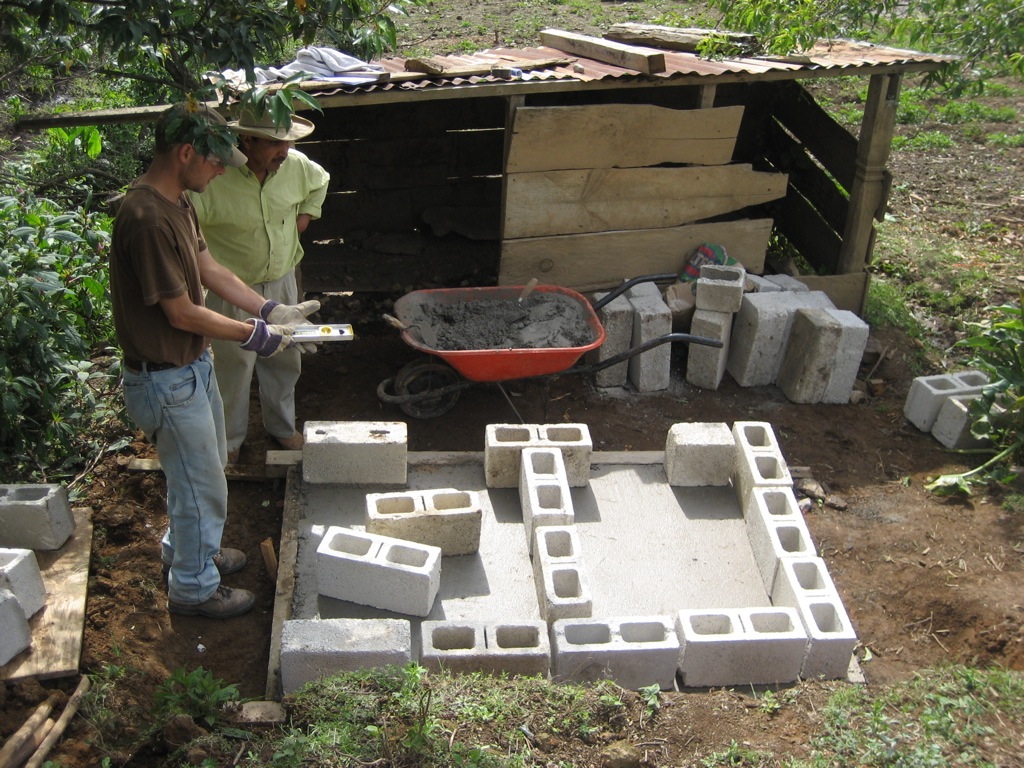
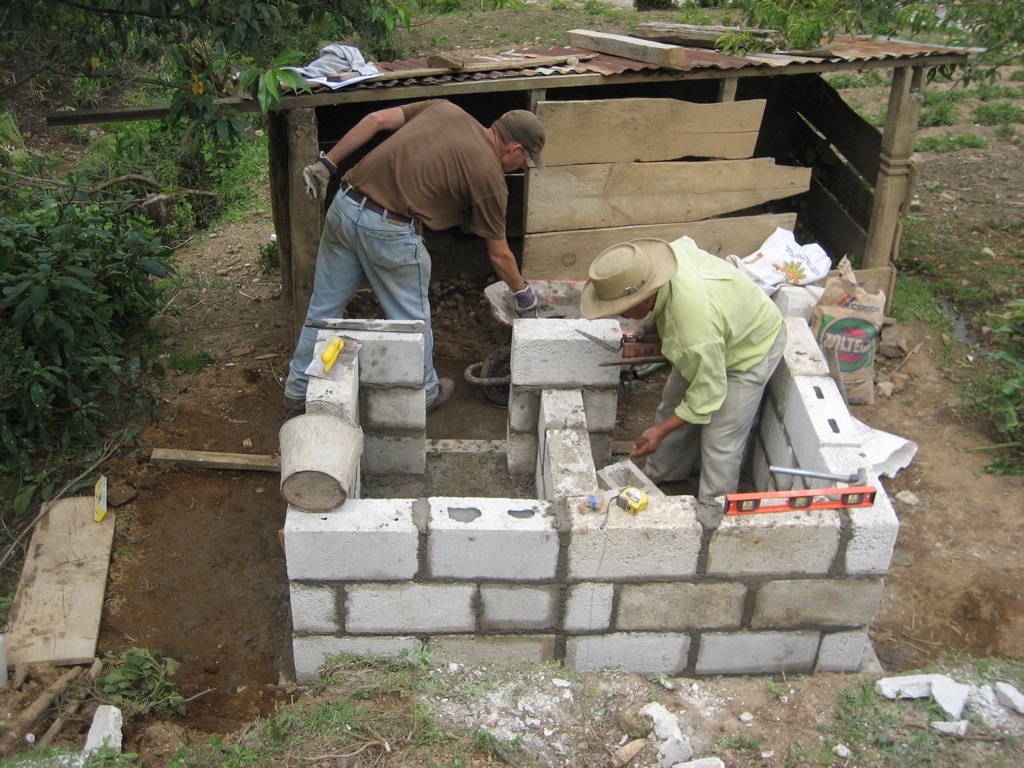
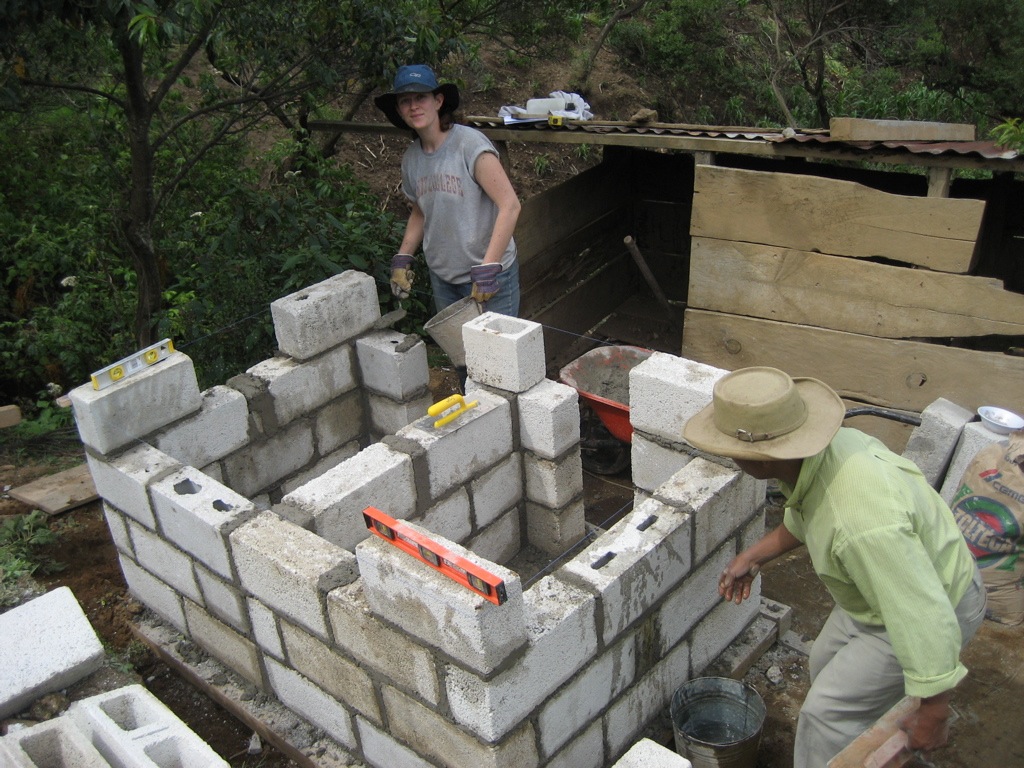
Talking with Don Marcos is great, because he likes to talk about absolutely everything that comes to mind, and examine it thoroughly. So while it might have been nice to do a half-day of hard work and then go home, that’s not the way it went down. We had a long atol break full of interesting conversation. Then we worked for another two hours, in such a good groove that we had one more layer of bricks to lay when he announced, “Let’s take a break. It’s time for lunch.” So we washed up again, and went to the same room with a table and three chairs to enjoy an hour long lunch and more lively conversation. We finished up the last layer of block, cleaned up the work area and headed home about 3pm. It was a good day. The weather was perfect for working, cool, but not cold; sunny, but not too hot. There was a tree shading the side I worked on all morning. I was glad I’d stayed around for the weekend after all. But I was once again worn out.
Sunday:
We decided to make it, as God decreed, a day of rest. Sort of. We washed clothes in the morning because there was so much dirty clothing it was spilling out of the bag and all over the floor. We were out of bread, so I made some more. Even days of rest come with a fair amount of work here. But I did some knitting, and reading and catching up on news and coffee drinking, and we went for a run in the afternoon.
The weeks here disappear. I’m always so shocked when we wake up to Friday again. I’ve been absolutely exhausted the last few weeks. This was just a sample of our work. The week before was filled with beauty contests, parties for the health center, the regularly scheduled health talks, drop-in visits. This week was charlas, tons of drop-ins, a birthday party, co-op meeting for the morrales. I wake up tired and go to bed tired, and I sleep like I’m dead inbetween. Lately I started taking vitamin C pills because everyone around is coming down with colds and I’m afraid I have no defenses left being this freaking tired. I think the exhaustion feeds my emotional swings, like the bawling incident after the talk in the school. I need a break. Fortunately, one is on the way. Next week we leave home for a while to meet the new trainees for Rural Home Preventive Health and talk to them about our jobs. Afterwards we’re going to visit the site of some friends, another couple we’ve wanted to visit for months. We will be coming up for air, shortly. Then there’s only one week left before I go home for my little brothers wedding. Yippee! I am exhausted, but overall things are going well. Fletch is his hyperactive self. I don’t know what it would take to beat the guy down, short of a very hard stick. He’s awesome, and it helps, usually, that he’s so energetic.
That, my friends, is life. And once again, it’s Friday.